
Headline inflation figures often tell only part of the story. The more important question may be: ‘How much capacity do consumers actually have to absorb rising costs?’
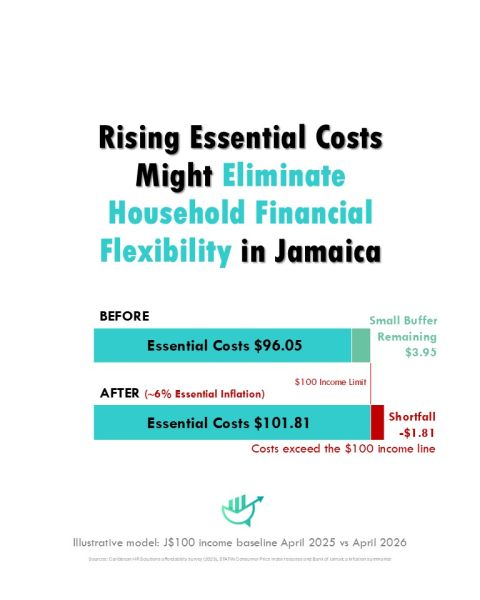
Recent affordability estimates suggest that many Jamaican households may already be operating with very limited remaining margin after core living expenses. Against that backdrop, continued increases across essential categories such as food, housing, utilities, healthcare, transport, and education can place disproportionate pressure on discretionary purchasing capacity.
This is particularly important because the categories experiencing some of the strongest increases are also among the least avoidable.
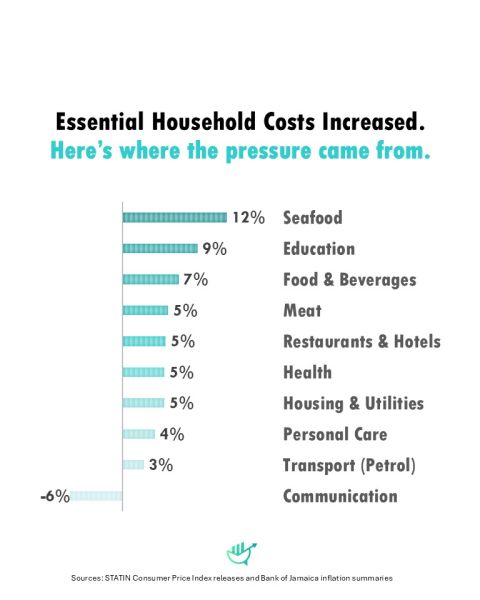
Consumers may therefore not necessarily stop spending altogether, but instead become more selective, more price-sensitive, more value-conscious, and increasingly prioritise essential expenditure.
This has broader implications for businesses operating in Jamaica and similar markets. Consumer environments shaped by affordability compression can affect pricing strategy, demand forecasting, inventory planning, customer segmentation, product positioning, and long-term growth assumptions. It may also contribute to increasingly uneven demand patterns across sectors, demographics, and income groups.
Understanding these shifts requires looking beyond headline inflation figures and examining how cost increases interact with household financial flexibility and purchasing behaviour at a more granular level.
At Bizect Consulting, we help organizations translate economic, operational, and consumer trend data into actionable business insight to support more informed strategic decision-making.
Sources
- STATIN Jamaica Consumer Price Index (CPI) releases, April 2025 – April 2026
- Bank of Jamaica Monetary Policy & Inflation Summary Reports, 2025–2026
- Caribbean HR Solutions affordability estimates reported by the Jamaica Gleaner (“Jamaican workers left with 40% of salary after core expenses”, January 21, 2026)
First published on LinkedIn on 14 May 2026.


