
The US-China strategic rivalry is increasingly extending into space. One area attracting attention is the development of satellites capable of manoeuvring close to other satellites. The technology has legitimate uses, including inspection, repair and servicing. But similar capabilities could also be used during a conflict to interfere with or disable an adversary’s satellites.
That matters because satellites are no longer peripheral to the global economy. They are infrastructure.
GPS supports navigation for ships and aircraft and helps coordinate transport and logistics. Weather satellites are central to forecasting and hurricane monitoring. Satellite communications provide connectivity and broadcasting. Earth-observation satellites provide data used in agriculture, mapping, infrastructure planning and environmental monitoring. Satellite-based timing also helps synchronise telecommunications and financial networks.
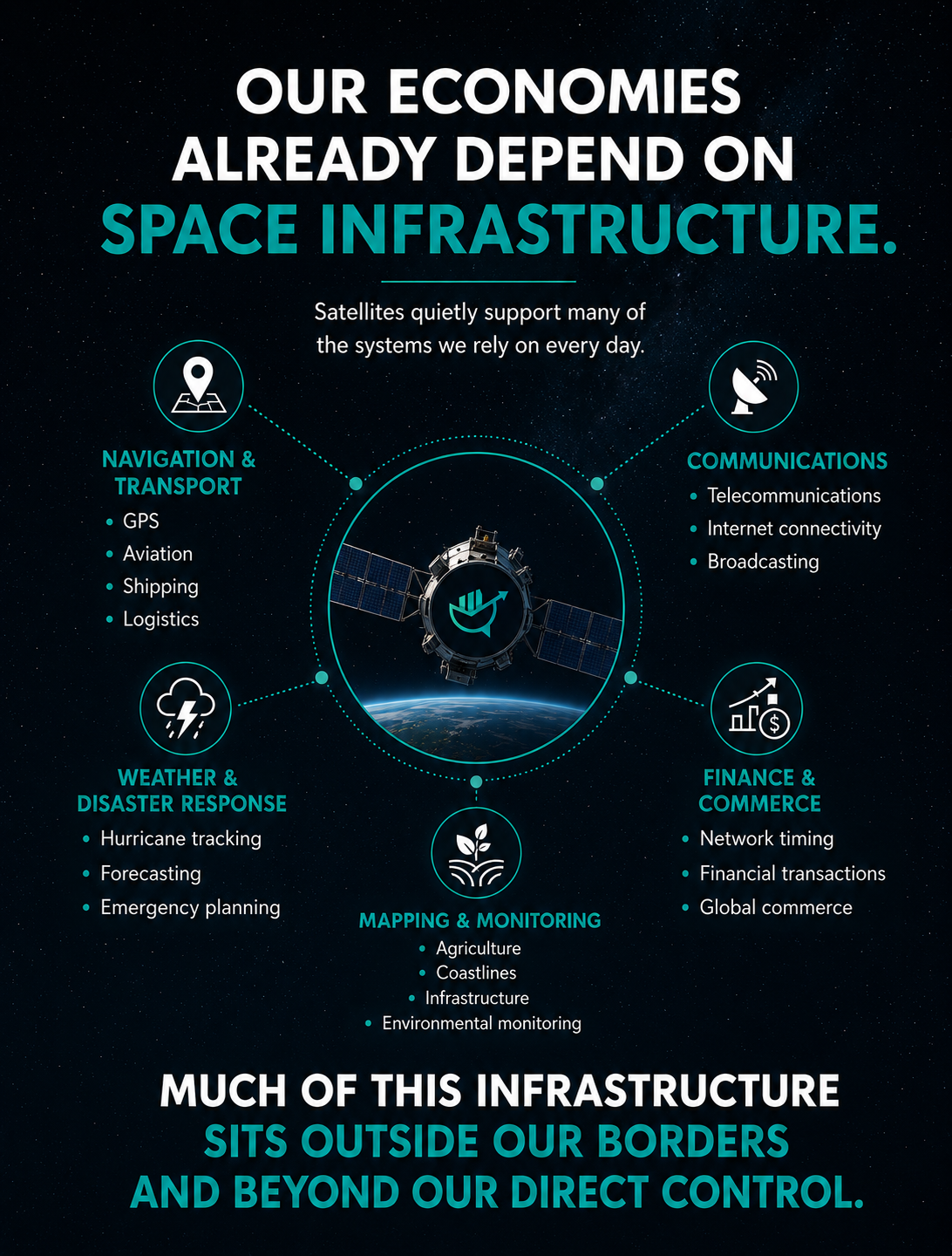
For Caribbean countries, the issue is therefore bigger than who has the most advanced space programme. We are highly exposed to hurricanes, dependent on international shipping and aviation, reliant on global communications and financial networks, and increasingly using satellite data for planning and environmental management.
Yet much of the space infrastructure supporting those activities is owned, operated and governed elsewhere. That creates a type of dependency that is easy to overlook.
As competition in space intensifies, Caribbean resilience will not mean developing our own satellite fleets. But it does mean understanding where our critical dependencies lie, what happens if those services are disrupted, and where redundancy is needed.
The new space race may be happening thousands of kilometres above us. Its consequences would be much closer to home.
First published on LinkedIn on 2 September 2026.


