
This week brings together three observances that don’t usually sit in the same conversation: (World Creativity and Innovation Day, 21 April, World Book and Copyright Day, 23 April, and World Intellectual Property Day, 26 April) but which show issues that are becoming increasingly interconnected.
Generative AI is lowering the cost and time required to produce content at scale. At the same time, it is introducing new complexity around authorship, ownership, and the use of underlying data.
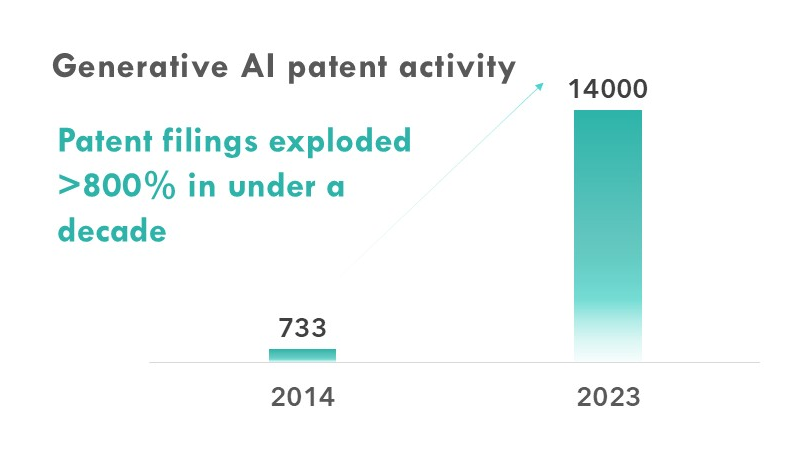
Evidence shows rapid growth in AI-related investment, patent activity (See: WIPO, “Generative AI Patent Landscape,” 2024), and organisational adoption, alongside measurable productivity gains in knowledge work. The implications for labour markets are already emerging. Routine, entry-level tasks are being automated or augmented, while expectations for higher-level skills are increasing.
For Jamaica and the wider Caribbean, this raises important questions. Digital adoption is fairly low among MSMEs, even as national priorities emphasize higher-value, knowledge-based economic activity. As AI tools become more embedded in productivity and competitiveness, gaps in adoption and capability may become more consequential.
However, intellectual property frameworks are also under pressure. Questions around ownership, attribution, and compensation (especially in relation to training data and AI-generated outputs) are still evolving. We are seeing a real-time shift in how value is created and captured. The role of the creator is changing from authorship to orchestration.
At Bizect Consulting, we see this as an important area for ongoing research; understanding how AI is reshaping productivity, work, and ownership in practice.
First published on LinkedIn in April 2026.


